


Archive for the ‘ Website design tips ’ Category

7 Web Design and Development Mistakes to Steer Clear Of

Tuesday, August 1st, 2017

Web Design Mistakes
In order to maintain a high performing website, there are several web design and development mistakes that you should steer clear of. Discover 7 of these mistakes in this post.

Scientists tell us that we formulate our first impression of something 15 seconds after we first come into contact with it. It’s true for people… and turns out it’s also true for real estate when it comes to “curb appeal.”

But did you know it’s also true for websites?

Studies show that 15 seconds is the average time a user spends on any website, so that’s how much time you have to get their attention.

Unfortunately, far too many people are still stuck in the Web 1.0 world of the 1990s — so they keep making the same mistakes over and over again. These are mistakes that ensure users click away from your page, which means that if your website is hideous, you can kiss those potential sales goodbye.

Here are 7 web development and design mistakes to steer clear of.

Web Design and Development: As Important As Marketing

You only have 15 seconds to set up a relationship between your brand and a stranger, so you need to make sure that you deliver content clearly, quickly, cleanly, and completely.

The following are 7 web development and design mistakes that people with websites still make; if any of these apply to your website, you’re losing out on serious market potential.

1. Failing to Optimize

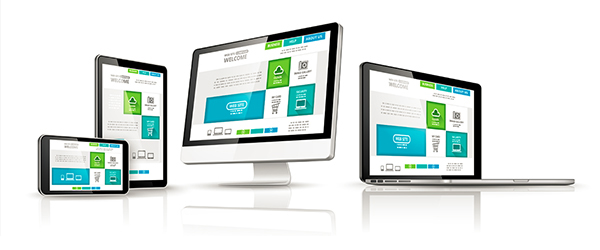
We’re way past the point of not optimizing for mobile.

Not only has Google started to track just how long mobile sites take to load and how legible they are compared to desktop sites, they’ve only recently announced that mobile sites will be their first concern when it comes to site ranking.

You need to create a unique mobile experience for users.

And while you’re at it, your website should look the same and be just as easy to navigate on all major browsers, not just Chrome and Firefox but Internet Explorer and Safari as well.

The future is going to be about having the internet at your fingertips at all possible times and you need to prepare for that.

2. Slow Loading Web Pages

You may think that flash animation, giant images, and splash pages are impressing your visitors. In reality, they’re doing the exact opposite because they cause your page to take too long to load.

Beware of gimmicks, unproven apps, and easy “site building” programs that load your page down with lines of code.

Your website should never take more than 2-3 seconds to load, and mobile should take even less.

Studies prove that the longer your site takes to load, the more people click away in exasperation.

While you’re at it, go easy on the pop-ups and interstitials, which usually do nothing but annoy visitors. Potential customers want to hear what you have to say right now.

3. Hard to Read Text

Your website is no place to experiment with unusual fonts or bizarre color combinations.

This is another area where webmasters forget to optimize web development and design for the mobile experience: if users have to “pinch and spread” in order to read your text, they’re far more likely to give up on it.

Don’t pack large blocks of text together, either; it makes reading feel like a chore. No more than two or three short sentences per paragraph.

4. Hard to Navigate

Putting all your info on one page is also not going to impress anybody; it’s only going to make things confusing. Just because you know where everything is, doesn’t mean your potential customer does.

Keep a simple top navigational bar. Make sure that none of your pages are “orphaned” by not linking back to the homepage. Put an easy navigation system on the bottom of each page as well.

You can use a sidebar to give everyone options if they want to explore absolutely everything.

Whatever you do, don’t use endless scrolling! Break up products or information into several pages and use a simple forward and back system to flip through them.

Don’t forget a good search bar that searches the site — not Google. People already know how to search on Google.

5. No Contact Info

Users are going to have a hard time being converted into customers if they don’t know how to find you!

Contact info should be on one clear, distinct page, linked to from the front page. It should list your physical address, one email, and if necessary, a phone number.

If you want to put forms on your site to facilitate setting up a meeting, consultation, or a home visit, make sure to keep it simple, with only about a half dozen fields to fill in.

Any more than that and customers become bored… and curious as to your intentions. Put your terms of service on this page, too.

6. Unorganized Content

Quickly tell people exactly what it is you do and how many different ways it’s done.

Users tend to stay just “above the fold,” which is the bottom of your computer screen, and maybe a little below it, which is where they start scrolling.

The rest of the page — including banner ads — usually slips right past them.

Put your most important information above the fold and have it continue below. Create separate, distinct pages for each service you offer and talk about them in detail.

Avoid overused stock photos to drive home your point; if you do use one, go ahead and purchase it so that your site doesn’t look the same as everyone else’s.

7. Anti-Social

It does no good for you to have social media pages, much less a social media strategy, if you don’t give users a chance to interact!

Put a share bar up at the top right of every page on your site — Facebook, Twitter, Instagram, Pinterest, Tumblr, perhaps email.

Make the process a simple one, so that users can generate great word of mouth with one click.

Web Design and Development is Part of Your Brand

Your website says as much about your brand and your product as any testimonial, review, or press release can.

It’s a combination main branch lobby, product circular, and social media presence. It shows who you are and how you want to interact with the world.

You should get started immediately refining your website and making it not just SEO optimized, but user-friendly.

Proper web development and design leads to near-immediate results. Not just in likes, retweets, or page hits — but in revenue!

post-1378

7 Things About Website Redesign You May Want to Know

Saturday, January 21st, 2017

Website Redesign Services

Your website is an extremely important part of your marketing strategy. Just as a shop window needs to be regularly maintained, decorated and updated to attract buyers’ attention, so does a website needs to be redesigned every now and then. A website is just like an online shop window, and it thus needs to be given a facelift. However, for a site to be properly redesigned, it is important to bear in mind that it does not only need to look aesthetically pleasing and make a good visual impact. It also needs to be functional from an SEO point of view. So, let us go over some of the main aspects to keep in mind when redesigning your website.

1. What is the purpose of your website?

Your starting point should always be focused on the purpose of your website. Is it purely informational, or do you want to attract sales? Your goals need to be very clear so that you can improve your chances of achieving them in time.

2. Carry out a website review

Your current website needs to be analysed carefully if you want to redesign it.

How should you carry out a site review?

Carry out an in depth review of what you like about your current site and pinpoint areas that you feel that need to be improved in some way or other. It is a good idea to look up some sites that you like, possibly those of your competitors. Look at the elements that you would like to incorporate on your website, and if possible try to do it even better than they did.

3. Bear in mind who is your target market

Since your website is intended towards your prospective customers, you need to focus on your target market.

How should you define your target market?

Describe the target market in detail, in order to to get to know who they are, and what they will be looking for and expect when they land on your website. This will improve your chances of having an impact on them, and encourage them to browse through the site and hopefully buy something or subscribe, or get in touch with you for a quote or for more information. You need to target your target market to possibly connect with them. At this point it may be helpful to build around personas to make this evaluation as realistic and as accurate as possible.

4. Decide if there are any new functions that you would like your website to have

If you do not have a content management system you may wish to consider whether it is time to have one. At this stage you will also need to decide on ways that could make your site easier to navigate.

Why is ease of use important?

Ease of use is very important for your users, because should a visitor feel that the site is too confusing or not well laid out, there is a high probability that she will simply leave and look up another site that can offer her what you could have offered. You need to make the site aesthetically pleasing and easy to navigate. Visitors need to find what they are looking for easily and quickly. This will also need to be possible on smaller screens such as those of tablets and smartphones, as many users are accessing your site from such devices.

Another important aspect is to include social media links on your site as nowadays many people will want to look up your presence on social media platforms so as to follow you there too.

5. Find out what works on the site and keep that

There are surely several good elements on your site. You do not have to change everything, and it is best to keep what works well to retain that effectiveness as much as possible. The redesign process should be focused on areas that can be improved. You will need to place importance on the aesthetic areas, as well as the content on the site. A content marketing plan will be important at this point.

6. Research and analyze your competitors’ sites

Your website will need to compete with several other websites online. Your redesign process will need to be carried out in a way that will help your site outrank them. So, you need to take a look at your competitors’ websites.

How should you carry out this competitors’ sites analysis?

Make a note of what you like and what you do not like. Once you run this type of in-depth analysis, put together an action list of what areas you can improve upon, and what you can do differently than what they did.

7. SEO considerations

SEO is important for your website’s success. Hence, during the redesign process it is very important to keep in mind the SEO perspective.

How should you go about it?

Start by analyzing your current SEO rankings for your most important keywords. These need to be retained because should you remove a page which has a high number of inbound links, you would end up losing a lot of SEO credit and a reduction in keyword rankings. Redirects from old urls to new ones, and on-page optimization needs to be done very carefully. Thus, you would need to devote a lot of attention to on-page  and off-page SEO as well as keyword analysis to ensure that your website redesign does well from an SEO point of view.

Through it all you will need to establish very clear objectives, so that whatever you do in your website redesign process you will always be aiming to achieve them. There are going to be qualitative goals, such as what you want your audience to feel and think when they visit your site, as well as how you intend them to react. Then there are going to be quantitative goals which may be linked with the leads you want to get, and the subscribers and sales you would like to achieve within a period of time, for instance.

Website redesign may be a bit overwhelming at first. Therefore, it is really important to do it step by step. It is best to come up with a detailed plan so as to achieve the results you aimed for. Support your website redesign with ongoing marketing initiatives in order to build brand consistency.


post-1349

The Role of Copy in Web Design

Wednesday, June 1st, 2016

Importance of copy on a website

“Good copy can’t be written with tongue in cheek…you’ve got to believe in the product.” – David Ogilvy

People who conduct business on the web focus a lot of their time and energy into search engine optimization and page rankings and rightly so. With millions of sites on the web you need to do all that you can to drive people to your Web site.

But once they get there it’s up to your copy to keep them there until they buy your product, hire your service, sign up for your newsletter or do whatever you want them to do.

Think of your copy as your sales person. If it’s not up to par, have the right pitch or doesn’t lead the customer towards making a purchase, then you’ll probably end up losing that person for good.  Likewise, heavy-handed copy that tries to push the sale or pressure the customer will also result in that person looking elsewhere for what they want.

So what’s the best way to write compelling copy that presents your product or service in the best light, but doesn’t make the customer click away to another site?

Use simple language in your writing

Unless you’re site is geared specifically for tech-heads, you’ll want to be sure that virtually everyone who comes to your site can understand what you’re trying to say. You may be the smartest person on the planet, but your Web site isn’t the place to show off if you’re trying to sell.

People really don’t like reading from their computer screens so keep your copy as brief as possible. A good rule is to use 50% less words on your Web site than you would in print.

If you must use long copy, consider breaking it up into several pages. People don’t like to keep scrolling seemingly endless documents. Also, use short paragraphs. Remember the key is to make it easier for your visitor to read.

Don’t use fonts that are tough to read and don’t use a font size lower than 10 point for your body copy.

Always use a spell checker before you upload any of your pages. Read your text out loud or get someone else familiar with grammar and spelling to look it over. Spell checkers are great, but won’t catch your when you meant to say you’re.

Write to the point

Pretend everyone who visits your site is impatient and write your copy so that it gets to the point quickly. When you write your copy, act as if you’re speaking to one person and write to them. Use words like you and yours. Imagine you’ve got a great product and you’re telling your best friend about it.

Write with honesty

People are smart and they can smell a scam a mile away. Focus on the strengths of your product or service and what benefit it has to the consumer. Don’t use hype; just tell them the plain truth.

When people go to buy anything they want to know what it can do for them. Focus your copy on benefits. Ask, how can this make my customer’s life easier? Remember that features don’t sell a product – benefits do.

Your copy is more important than what you’re actually selling. It can make or break your sales, so it’s in your best interest to put a lot of time and attention to what your site says. If you don’t feel up to the challenge then hire a professional copywriter to do the job for you.

Don’t short change yourself or your sales with bad copy.

– Nina Menezes


post-1156

10 Things Your Business Needs To Dominate Google

Thursday, May 12th, 2016

Is your website optimized for GoogleMost business owners want more visibility on the web. Dominating the first page of Google requires an understanding of what Google is looking for and how to take advantage. Below is a checklist of 10 things you can do to increase your search engine rankings.

1. Is your website optimized for Google?

Find out which keywords you would like to be ranked for in Google. Search for these keywords in Google and look at the top 10 rankings. The blue text above each search position is called the “Title Tag”. Count the number of top 10 positions that have your keyword in their title tags.

Check your website now. Do you have your keywords in the title tag? The title tag is regarded as one of the most important in Google’s on-page SEO factors. Read about heading tags, meta tags and keyword density for more help.

2. Does your website load quickly?

Google likes sites that load quickly. Slow websites have a significant impact on your search results. Check your load speed here:
https://developers.google.com/speed/pagespeed/insights

3. Is your website mobile friendly?

Google wants sites to pass their mobile-friendly test thereby providing a better overall experience for their search engine users. Go to
https://www.google.com/webmasters/tools/mobile-friendly/.

Test your website at this URL to find out if your site is mobile friendly.

4. Do you have Google+, Facebook, Twitter, LinkedIn & YouTube pages setup?

Google favours websites that are in these top social networking sites for two reasons:

1. A business that takes the time to set up their profiles on these sites appears to be more brand aware and Google loves brands.

2. These social media sites will send traffic to your website as Google looks at referral traffic to determine rankings.

3. Another benefit of being on these social sites is that your customers are more likely to share your business with their friends.

5. Is your website listed in the top 100 local business directories like Yelp?

Google prefers sites that have a listing in the top local business directories for two reasons:

1. A business that takes the time to create a listing appears to Google as a business that will be around for a long time.

2. These local business directories will send traffic to your site. Referral traffic is one of the factors Google uses to determine rankings.

6. Do you have an “About Us” page?

A page that introduces your business properly will build rapport and hopefully will convert your visitors into customers. You have only a few seconds to convince your visitors and turn them from just browsing into someone that wants to use your services.

7. Can visitors find your contact information quickly?

Make sure you have a Contact us page with your company name, address, telephone number and a contact form.

8. Do you have testimonials on your website?

Think back to the last time you picked up a book, or researched the next television you wanted to buy. Where did your search start? It probably began with looking at reviews.

Having testimonials on your website will improve your chances of making a sale as people like to read what others have to say about your business.

Remember, there is an advantage to having visitors on your site as time spent on your site is a ranking factor in Google.

9. Do you have a video on your website?

Visitors love to watch videos on websites. A video on your website will keep your visitors on your pages longer. Google tracks the time people spend on your page to find out how good your website is compared to others. Having a video about your services or a welcome message from the owner of the business will prevent visitors from leaving quickly

10. Do other sites link to your website?

This is an important ranking factor. Having another website link to yours is like getting a vote. Make sure you get high quality links to your website. Use http://ahrefs.com to check sites linking to your site. Find out how many incoming links you have. Check out your competitors’ link profiles and find out which sites are linking to them. Build links on the same types of sites they have links from.

To recap….

Your business needs a website that:

1. Is optimized for Google

2. Loads quickly

3. Is mobile friendly

4. Is in the top social media sites

5. Is listed in the top local directories

6. Has an About page

7. Has clear contact information

8. Has testimonials

9. Has a video

10. Has great backlinks

Need assistance?

If you noticed that your website hasn’t passed, don’t worry. InterDream Designs can help you fix any or all of these site issues. If you would like our assistance, contact us at nina@interdream-designs.com.

post-1242

Top 7 Tips for a Successful Website

Monday, April 18th, 2016

Top 7 Tips for a Successful Website

Whether your website is a small mom and pop store or a large corporation, good web design skills are an absolute must if you want to reach your target market. When creating your website, you need to remember that your site has to compete with a lot of websites that are on the Internet today. The best websites on the net are those that are easily understood, have engaging content and are easy to navigate.

Here are some tips to help you design your web pages with your visitors’ needs in mind.


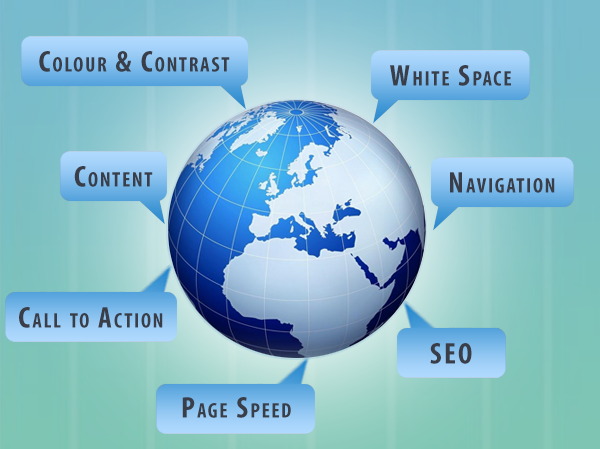
1. Colour and Contrast

The colours should be pleasing and the same colour scheme should be used throughout the site. Don’t use a dark coloured font against a dark background as it will be difficult to read, same with light font on a light background. There should be a good contrast between the background and the font colour. You want them to read what’s on your site don’t you?


2. Navigation

Internet surfers have become quite used to seeing things in a particular way. Ensure that your site navigation is easy to recognize and familiar to use. Menus or navigation bars should be in the same place on every pages. Remember the 3 click rule. Visitors should never be more than 3 clicks away from the information they’re looking for.


3. White Space

White space is important for web design because it improves readability and focus.  It is also referred to as ‘negative’ space. Keeping your site simple with white space will give your page breathing space instead of cramming it with content. Google uses white space effectively on it’s page. The only content on the page is the search section surrounded with white space on all sides so the focus is only on the search.


4. Content

People are in a hurry. They rarely read, they scan pages. Use attractive, easy to read fonts and simple language. Use short paragraphs, headers and bullets. When writing content, keep your tone friendly and conversational and your sentences short. People go to the internet to get information. If you can provide useful information on your site that is updated regularly, your visitors will keep coming back to your site!


5. Faster Loading Pages

Have you ever gone to a site and waited and waited and waited for the page to load? Make your web pages load faster by minimizing the number of graphics you use and by optimizing images. Another reason you need to have pages that load quickly is because Google has identified page speed as a search ranking factor. GTmetrix is great tool to test your website loading speed.


6. Search Engine Optimization

If you’re like most businesses who want to be found online in the search engine results, you will need to optimize your website for search engines.Before you start writing content for your site, you must first decide what keywords or phrases visitors are using for your niche. Once you have picked your keywords or phrases, add them in the content. Google Keyword Planner is a popular keyword tool to choose keywords.


7. Call to Action

Having a call to action (CTA) will encourage your visitors to take action. Asking visitors to buy something, request a quote or subscribe to your newsletter are examples of call to action. They are usually placed above the ‘fold’ (viewable area). For longer pages, it can be added at the bottom of the page too.


Summary

The page look and structure play an important role along with other elements in helping users find what they want quickly  and easily. It improves the user experience and provides your users with content they can read and take action on.


post-1170

6 Critical Factors When Designing a Website

Sunday, March 20th, 2016

6 critical factors for web page designHave you noticed how some websites are a traffic magnet attracting visitors while others are just chugging along? The reason is owners of the successful websites have marketed their sites while the others haven’t.

If any business needs to survive in the online market, they need a dynamic web presence. The following 6 factors should be considered when building a website:

1. Goals and objectives:

Most clients who have no idea why they want a website, until you ask them why. They are created because everyone has a website so they have one too.

Defining goals and objectives is the key to great website design. If you don’t have a pre-determined goal, then you’re wasting your time. Having no goals and  objectives is like walking in the middle of the desert with no clear direction. For example, your website goal could be increasing sales, building communities, non-profit or educational. Yahoo is community based, Amazon’s website purpose is to increase sales. Goals must be measurable and realistic. For example, if you get 5000 visitors per month and aim at converting 2% of these visitors into clients, then your website objective should be 100 prospects per month.

2. Target audience:

Having a target audience should be part of your online marketing strategy. Your site should be solving a problem and aimed at a specific target audience. Do you have a target audience? Don’t make your target audience the entire population of the world. It should be your niche market. If you’ve got a product that says “for coaches and trainers”, guess what. You’ll get the attention of coaches and trainers because you will be directly addressing their needs.

Knowing where you’re going is important. But, knowing who you’re going after is also important!

3. Copy and content:

Good copy persuades your visitors to read your text and take action. Your headline is the most important element in your copy. If you have a terrible headline, your visitors will not want to read the rest of the copy. A good headline will arouse the curiosity of casual browsers and make them want to read more.

Having fresh content that is updated often will keep search engines and visitors coming back to your site. If you want the ability to update and change information yourself, consider having a content management system like WordPress installed.

4. Web Design:

Once you have defined your goals and objectives, developed your website marketing strategy and then written your copy, you are ready to begin working on the design of your website. This information should be passed on to your designer who can develop a site map on how all the pages will be linked to each other. It shouldn’t take more than three clicks to go to another page of the site.

5. Website Promotion:

How can you get more visitors to your website? Some popular website promotion techniques are SEO, pay per click advertising, building inbound links, eNewsletters, blogs, forums, press releases and submitting articles. Read more about how to promote your Website.

6. Measurement:

Once your site is optimized and promoted, check your website statistics to improve website conversion, copy, content etc. Are you converting visitors into prospects? It doesn’t matter how many people land on your website, but more importantly, how many of them actually take action, like for example, contact you. Keep tweaking your web pages and measure your response. Are those tweaks to your web pages, increasing your conversion rate? If it improves, keep the pages. Keep improving your copy and experiment with it until you’ve achieved your objectives.

post-1175

What Women Want In A Website

Friday, January 15th, 2016

Tradition suggests that men tend to be hunters while women tend to be nurturers and this tradition has more to do with Websites than you might think.

What women want vs. what men want

Web Page Designs for Women’s WebsitesIn many ways Websites geared towards men and women mirror their print magazine counterparts. Many men’s magazines focus on cars, technology and gadgets while women’s magazines focus on beauty, relationships and nature.

In the online world appealing to women’s interests and wants is much different than a man’s. When creating a Web site that targets women, you should keep in mind that most women are looking for more than just information. They’re looking for the person behind the Web site.

Women want to know who the person is and if they can be trusted, while men are more concerned with the nuts and bolts of the site and what they can get out of it.

Give ‘em someone they can trust

When you target women, give them your core message up front. Tell them what your business or service is about and how it can benefit them. Personal testimonials are important because they show you as being a real person who is trustworthy and has their best interests in mind.

If your target market is primarily women, you would do well to set up your site more like a community than a fact sheet. Creating a forum is one way to develop community as is adding comments from women who have used your site and found it to be worthwhile.

Quick information is best

Men are also happy pouring over large amounts of data. However, women prefer information to be to the point rather than long winded. It’s not that women can’t interpret large chunks of information, rather they respond better to quick and timely content. In addition, many women are juggling family and careers so their time to scan tons of information is limited.
Web page designs for women’s websites
Another important point to remember is that women do not like being sold to. Don’t use information simply as a tool to get them to buy something. That’s the easiest way to abuse the trust they put in you and your products and services.

A sale should be a natural reaction inspired by good, honest content.

Unless you’re dealing with women in a specific field of technology, it’s best to avoid technical jargon. Your content needs to be clear and simple with easy to understand language.

Why is credibility so important?

As mentioned earlier testimonials, are great. Women really value credible information and resources that can be backed up. Don’t just try to sell them your product or service, let them know how it can make their life easier and show them examples that include others just like them who are satisfied.

Marketing specifically to women is easy if you follow some simple advice. Honesty is the best policy. If you’re genuinely interested in making their lives better, let that show through in your content and you’ll do just fine.


post-1124

Top 3 Issues Affecting Your Website And How To Deal With Them

Tuesday, September 1st, 2015

Top 3 Website IssuesHaving an attractive platform for connecting with customers and prospective customers is no longer enough. Business owners also have to strive for overall site fitness. This is vital for keeping bounce rates low, attracting a steady stream a visitors and ensuring an optimal user experience. Following are 3 website issues that are currently having an impact on how people see your business and how likely they are to stay on your pages.

1. Page Speed

Are your pages slow to load? If they are, then you probably have a very high bounce rate. This is the rate at which site visitors are bouncing right back to search engine results in order to find faster loading sites or more relevant information. It can have a significant impact on your search engine ranking and it can also diminish your online reputation. No one wants to waste their time waiting for slow loading pages when they can easily head over to other platforms that load in under four seconds.

The best way to fix this problem or to avoid it entirely is by choosing the right hosting company and the best hosting plan for your site needs. If you have a consistently high volume of web traffic and find that this is starting to impact page loading speeds, now is the time to consider the benefits of upgrading to a dedicated server, rather than paying less for shared hosting services. If you’ve already invested in a high-end hosting package and aren’t sharing your server with a number of other companies, consider switching to a larger and more efficient provider that has turbo servers, ultra-rapid loading speeds, multi-redundant networks and other features for ensured reliability and speed.

2. Broken Links

Did you know that a bad link profile can prevent you from ever getting a first page rank? In fact, broken links can lead to painful penalties at the hands of major search engines that drive your site further down the search results page. When people click broken links and don’t find the pages that their looking for, this also reflects poorly on your business. Most web users will simply seek out sites with better levels of overall fitness so that they can find what they need without a lot of extra work or hassle. Connect with a reputable web management or SEO Company in order to get your link profile cleaned up.

3. Trouble Finding Information

Put yourself in the customer’s shoes and then take a tour of your own web pages. Is your site layout intuitive? Does everything appear to be where it should? If your site layout is difficult to navigate or unnecessarily complex, this will cause people to leave. Web users are fickle, impatient and always expecting fast answers. Why would they work hard to search for information on your site when they can easily find it on others? There are a number of website issues that will likely require the assistance of an IT or web design expert to fix. Low-value, low-quality or poorly organized information, however, is something that you can have a hand in resolving yourself. Check out the websites of a few popular competitors and see how their info resources are organized. You can then use these same strategies to make your own pages more user-friendly and far easier to navigate.

post-1104

Are you the owner of an invisible business?

Monday, June 15th, 2015

Are you the owner of an invisible businessThere is no denying that the internet has taken over our lives in all sorts of ways. From the possibility to buy goods and services online and have them delivered to your home, to making payments online and corresponding more easily, most people would not be able to imagine living normally without accessing the internet every day, and often, more than once. Based on this fact it is practically unthinkable for a business operating in this day and age not to have an online presence. No matter how small the business is, it is imperative to have a website nowadays. A business that does not have a website online will end up:

1. Showing a lack of credibility

2. Demonstrate that it does not care about its brand image

3. Lose the possibility to sell to thousands of people all over the world.

4. End up uncompetitive and eventually it will run out of business.

Unfortunately, some business owners still fail to appreciate the importance of having a website. According to a survey carried out recently by Yodle, there is a staggering 52% of small businesses that do not have a website. These business owners are essentially putting their business at a big disadvantage, and unless they decide to invest in a business website, they are likely to end up running out of business in a few years!

If you are one of these business owners, let us put it more simply – you have two options to get online:

1. You can either design a website yourself. Many business owners who choose this option though have some time to dedicate to this project, as well as a basic idea of how to go about it.

2. Or else if you do not know how to do that you can just hire someone to do it for you. There are many service providers in this line of business nowadays. They specialize in business website design as well as internet marketing.

If you want to save money, or are worrying about the costs involved to hire a web designer, don’t worry. You do not have to be a computer specialist to design a simple website for your firm. There are lots of tools that can help you do it yourself. However, you do need to have some time to devote to this task, along with the inclination to do it. Having said that, hiring a web designer is not going to cost you a fortune either. There are many experienced web designers who will be able to offer you effective and good website designs at a relatively low cost. In fact, you will be amazed at how cheap it is in reality.

Whichever option you choose, the truth is that you have to do it. Either way, you need a website for your firm. Procrastinating or simply deciding that you do not have the time, inclination or money for it, is definitely not an option.

Try the Google Test

We suggest you try this out! This is a simple thing that we recommend that you do. Just type in your business name in Google and see what happens. The results that come up (if any) will offer you an idea of what prospective customers will find if they were to look up your business online. Chances are that there are a couple of results, but nothing valuable or helpful. What do you think will customers think when they are faced with this? Surely, they will say that your business does not seem to be credible or trustworthy as it is practically invisible. Then, they will simply look up another firm in your line of business to satisfy their needs. So simply by doing this basic Google experiment you will be able to learn a lot.

According to Yodel’s survey, only about 12% of small businesses made use of online advertising. Probably you fall in this category too. So what should you do?

1. Create a website and/or a Blog.

2. Make sure your homepage is interesting and well laid out, making it enticing for customers who land on it.

3. Create a convincing ‘About Us’ page as this is the most frequently visited page, after the homepage. Include any significant stuff about your firm that can help you make a good impact on customers and make them feel that your business is trustworthy.

4. Distinguish yourself by having a good brand name and design. Remember that there are hundreds or thousands of businesses similar to yours, and so you need to be distinctive.

5. Install social media sharing buttons so as to encourage users to share content, including information about your business or products/services.

6. Encourage visitors to subscribe. A mailing list or a regular newsletter could be really effective. An opt-in form should be made available in prominent areas of your website.

7. Your site needs to be interesting and engaging in every possible way. Do not stop on the promotional aspect only. Rather, come up with innovative ways to offer valuable content to visitors. The content should be interesting and easy to read. Put yourself in the mind frame of the customer so as to create content that they are likely to find helpful in their daily lives, and that they will be willing to share. How-to guides, regular blog posts, ebooks and videos are some of the most common methods you can use.

8. SEO friendliness is of utmost importance. Besides valuable content, you should also make sure that it is rich in keywords and phrases so as to have search engines rank your website or blog highly.

9. The best website designs enable visitors to find what they are looking for really quickly and easily.

10. Mobile friendliness is a must nowadays. Bear in mind that many prospective customers may look up your site using a tablet or smartphone. So your site needs to be mobile friendly.

11. Take action right away! Every day that goes by you are losing on customers and potential sales. So what are you waiting for?

post-1075

Understanding The Principles of Web Design

Wednesday, May 6th, 2015

Anyone can build a website nowadays with some training, but building a great site requires an understanding of the principles of web design. You see, there is more to creating a website than just having it look good as there are various accepted rules that just makes everything flow more easily.

Hierarchy

Whenever somebody comes to your website they will land on your home page. The principle of hierarchy is that your home page is used to tell visitors about the most important information regarding your products or services. Visual hierarchy involves the designer structuring the website in such a way that the reader can instantly tell the order in which they should read the content. In other words, make sure that your home page guides people towards the information that is key to your website and give less important information a less prominent position.

Proportion

Fundamentals of Web DesignProportion is the way that two elements of a design relate to one another. If you look at a typical WordPress website, then you will see that the bulk of the information is on the left with the right column being used for snippets of information and links. This scale works well as it tells people the roles that are being played by both areas, but just remember that you should never split things up evenly as symmetry does not work so well on websites.

Repetition

By repetition we mean that certain design elements remain the same from your business cards, to letterheads, to your website. This continuity even on the various pages helps to create a sense of uniformity, which people love and of course one of the key principles of web design is to create a flow from page-to-page so that people know they are on the same website as before due to each web page having recognizable features.

Harmony

Harmony in a design is important as it gives the feeling of everything actually belonging together. Harmony creates balance and it gives a sense of the web designer being in control with all of the information laid out in an easy-to-understand manner – this is appreciated by visitors to the website. Do not have blocks of various sizes scattered all over as this is difficult for the eye to follow.

Contrast

Having everything looking the same is boring and that is why contrast is one of the most effective design principles. You need to offer some contrast by using various fonts, colors, image sizes, and do so between two different design elements of the website. This helps to create more of a visual impact for the visitor and is more likely to lead to the kind of interaction that the website owner wants from their visitors.

Alignment

Alignment links to the actual structure of the website. It deals with the way in which two elements, that are linked, work together from a visual perspective. Take for example a piece of text with a corresponding image. How will the text be positioned according to the image? Will it be to the left, right, with the image above it, or perhaps side by side? The alignment of such features will have a major role in determining what people think of your site when they land there. Keep things aligned to keep it looking organized.

Dominance

The idea of dominance in effective web design is that you use your key point as a real focal point on the page. This could be a call to action button, a sales pitch, gallery, or anything else that contains the main message that you want people to get out of visiting each page on your site. Think carefully about what the primary interest is for the web page and make sure that this is not hidden away or people will simply not understand what the point was of the page.
These are the fundamentals of web design to be aware of, but we are not even talking about complex issues here. Instead, these are web design basics that can make a real difference to the way that your website looks and how it is used by your visitors. These principles remain no matter what the design trends are at any given time as they form the absolute core of the structure of a website. Keep them in mind and you will produce something that is not only visually appealing, but you will also see an improvement in the way people use your website and that in itself is worth a lot.

post-1046